Automotive · ADAS · Safety-Critical · 2023
The project began with Bosch conducting an L2++ Intersections study to gain a deep understanding of the needs and demands of Chinese urban drivers when navigating intersections. This study identified key user requirements and pain points associated with using L2 systems in these scenarios. Based on the findings, Bosch partnered with Star to collaboratively develop a prototype concept aimed at addressing these challenges. The goal was to refine the solution and prepare for the next round of user testing, using the prototype and an integrated cluster concept in a driving simulator, providing not only UI solutions, but also ideating on additional information sources like sounds, seat vibrations, interior light indication and haptics.
I joined a project with another designer, focusing on a comprehensive analysis of Bosch study results, user pain points, and specific Chinese traffic regulations. The next step involved creating detailed storyboards for various intersection crossing scenarios. After outlining these scenarios, I researched existing solutions and facilitated an ideation session to explore enhancements or new implementations using current in-car hardware. We then produced 3D renders to visualize the road situations depicted in the storyboards. Finally, we integrated all components into a cohesive clickable prototype.
Research
The study commenced with Bosch conducting an extensive user study focused on the utilization of L2++ systems while driving through intersections. Bosch shared the findings of this study with our team, allowing us to thoroughly analyze the results and gain a deeper understanding of the challenges and requirements faced by drivers. This informed our ideation process for potential solutions.
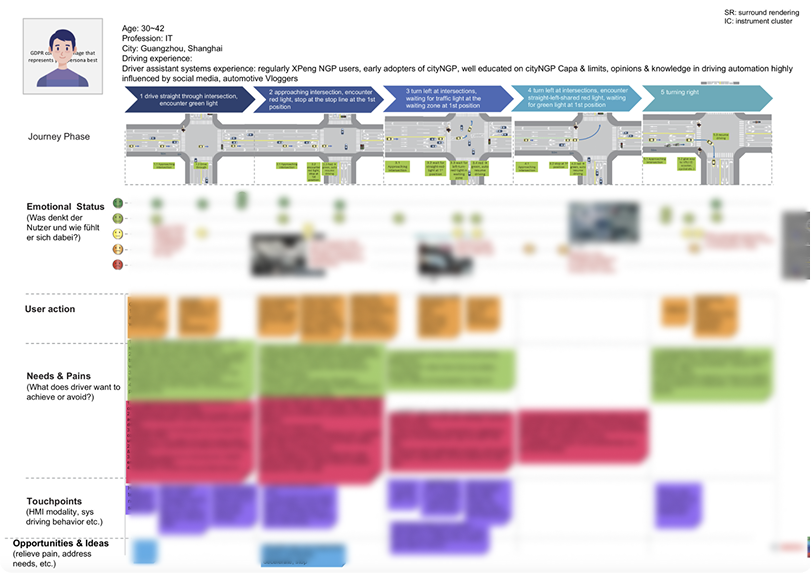
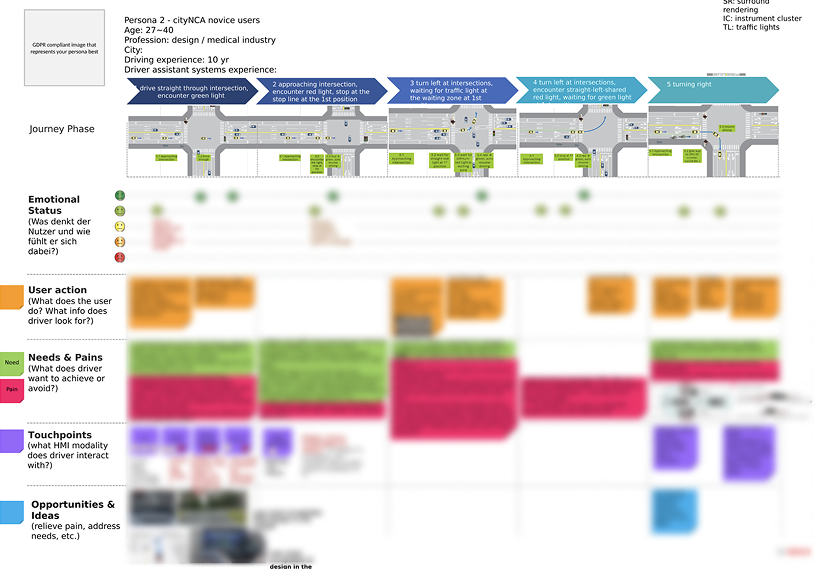
Example of initial input from a Bosch study
Process
I developed a comprehensive analysis for five distinct scenarios:
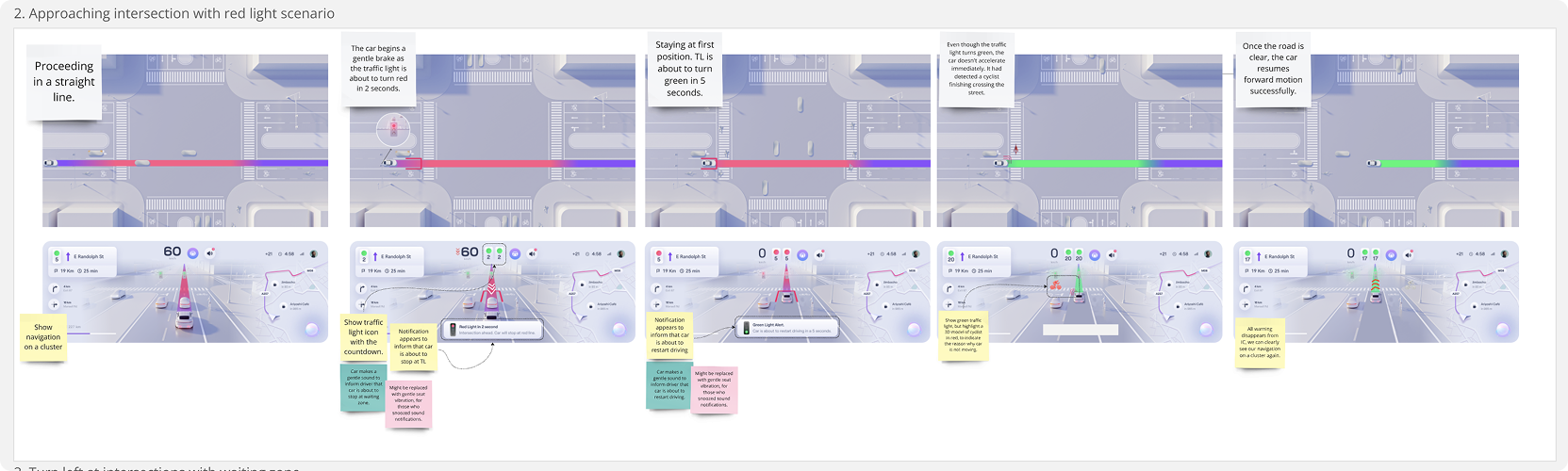
The objective of this analysis is to delineate the movement of an ego vehicle through intersections, identify potential obstacles, and describe the vehicle's responses to these challenges. Additionally, it aims to outline methods for informing the driver about the vehicle's decision-making processes.
Storyboard example
Design
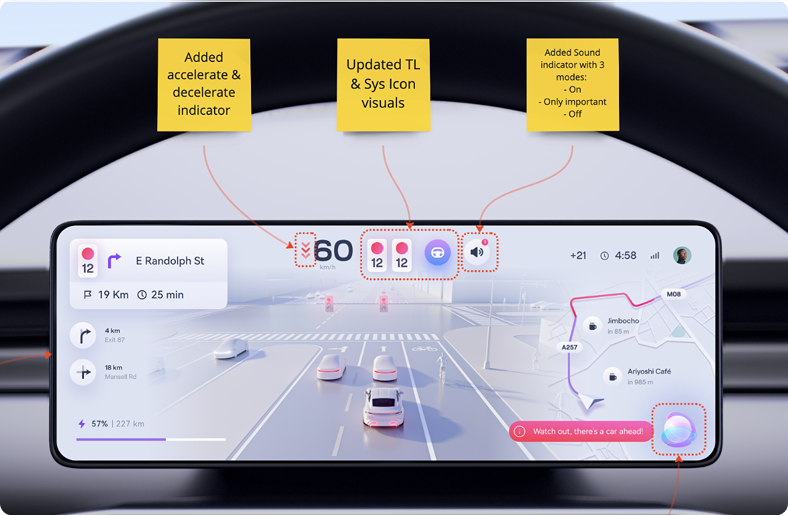
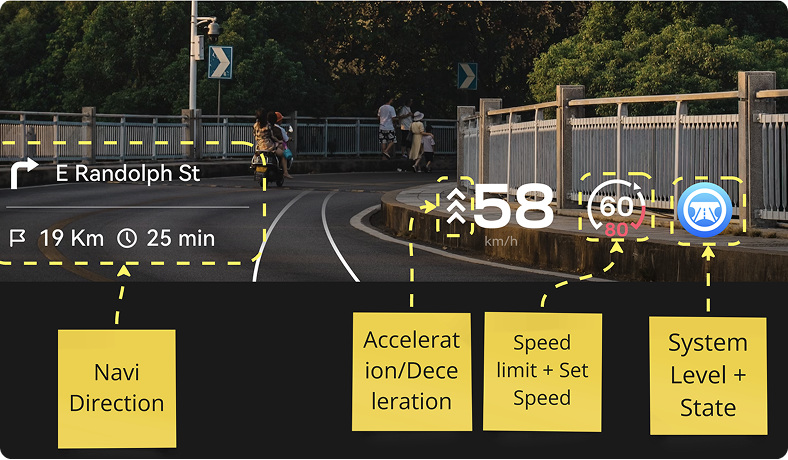
The system now features an Acceleration/Deceleration indicator positioned near the speedometer, complemented by a HUD display and a route indicator within a 3D Situational Awareness (SA) view. This enhancement informs the driver of the vehicle's decisions to accelerate or decelerate.
A floating icon representing traffic lights provides real-time information regarding the state of traffic signals and includes a countdown timer. Sound notifications are available in three modes: 'On', 'Only Important', and 'Off'. Even when notifications are turned off, the driver will still receive alerts about the vehicle's decisions through vibrations in the seat and steering wheel.
An L2 system activation indicator has been implemented to reflect the current level of automation, allowing the vehicle to automatically adjust between different levels of automation based on the complexity of road conditions. Furthermore, an interior light indicator has been introduced to signal potential dangers and the direction from which they are approaching.
A stop line indicator within the 3D SA view marks the area where the vehicle is expected to stop, whether due to a red traffic light, an obstacle, or oncoming traffic. Obstacles and oncoming traffic are highlighted in red within the SA view to signify danger and to explain the vehicle's decision to slow down or stop.
HUD
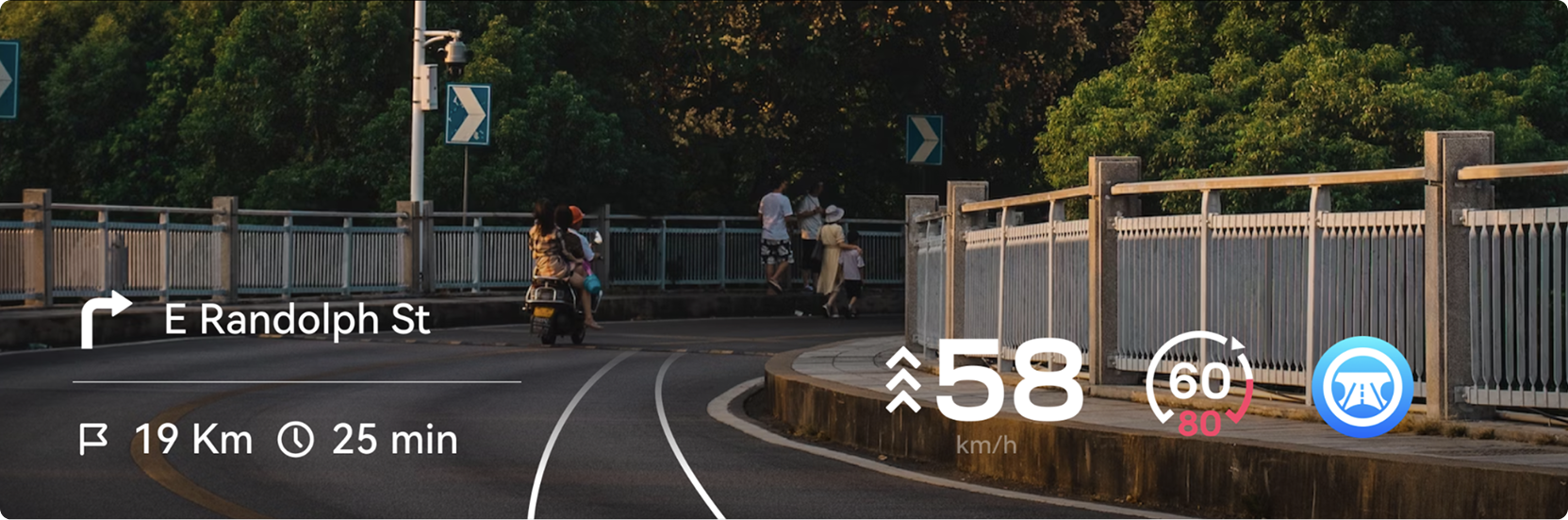
In response to a request from Bosch, we developed a concept for a Heads-Up Display (HUD) that incorporates all essential indicators. This design aims to replicate critical information for drivers whose vehicles are equipped with HUD technology and who prefer it over the conventional instrument cluster.
Instrument Cluster
Although the detailed design of a custom instrument cluster was not included in the project scope, we recognized the necessity for integrated circuits to effectively translate our concepts. By conducting thorough research on Bosch's brand guidelines and leveraging a personal automotive library, my colleague and I successfully developed a bespoke instrument cluster design. This enhancement significantly elevated our prototype, pushing it to new heights.
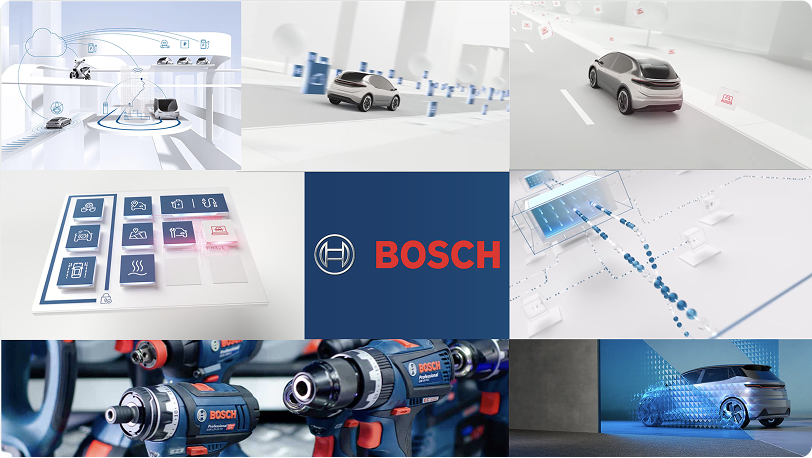
Simple look & feel exploration of Bosch brand
Final Instrument Cluster design
Prototype
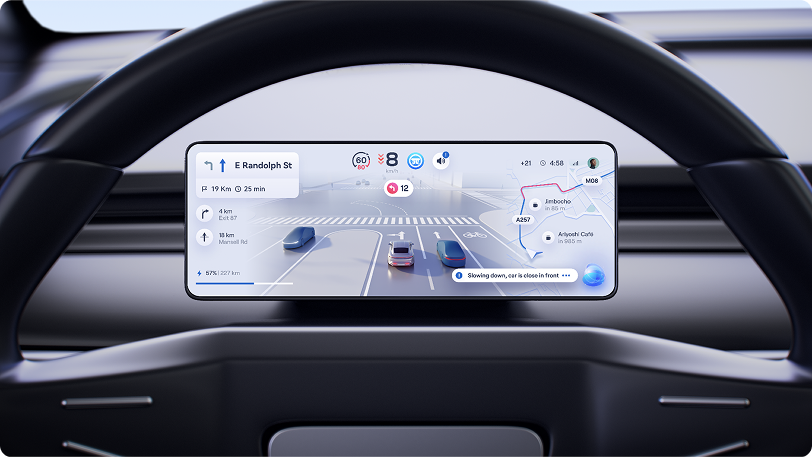
Our primary deliverable was a fully interactive prototype that integrated all components seamlessly. Utilizing a bespoke 3D mock-up, we combined the Cluster and HUD display, incorporating a switch-toggle for each stage. This feature enables drivers to effortlessly access a bird's-eye view, providing an overview of the overall situation and road conditions at every point in the process.
Please reach out directly for a quick prototype demo session.