Automotive · Haptics · HarmonyOS · 2022
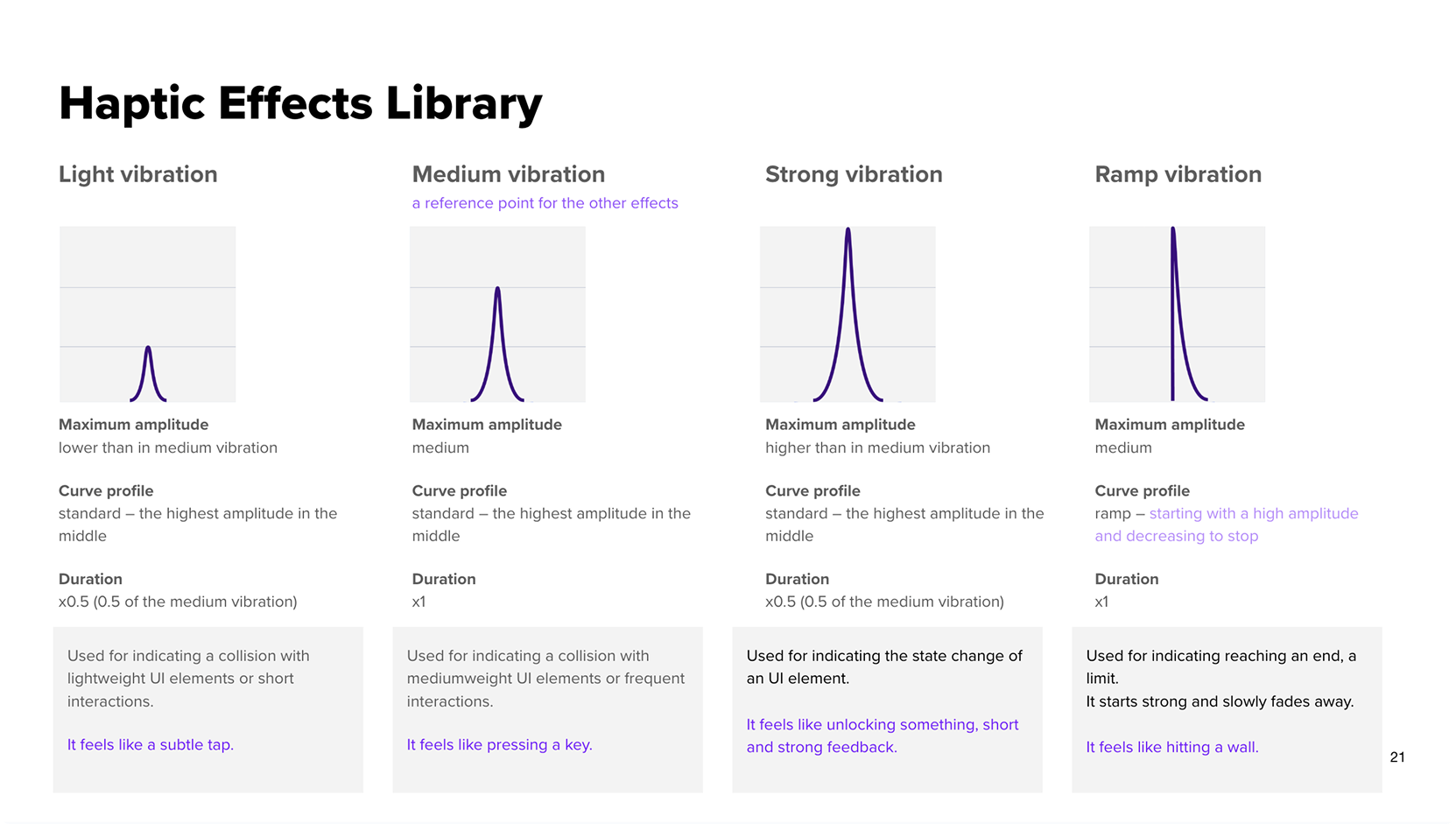
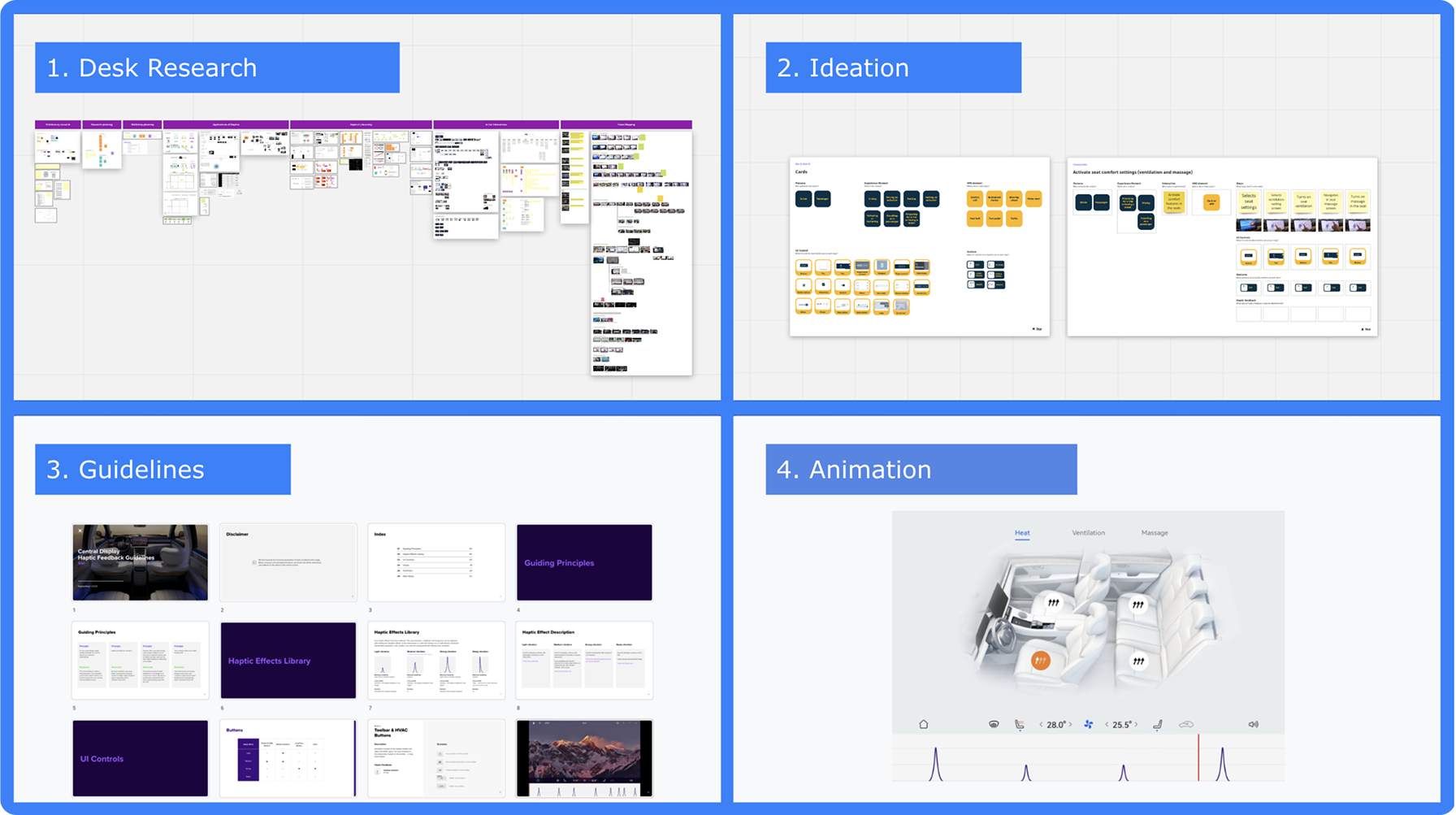
As part of a team of five designers, I contributed to the development of a Haptics Effects Library for the existing Harmony OS system. Utilizing the existing HMI, we identified features and types of interactions suitable for haptic feedback. My primary responsibility was to define the core haptic functionalities of the system, align them with existing interactions, and establish a set of principles to ensure consistency throughout the system. In the later stages of the project, I also took on the responsibility of creating explainer videos, selecting sounds to emulate the haptic feedback, and visualizing haptic graphs to enhance our deliverables with effective visual representations.
Research
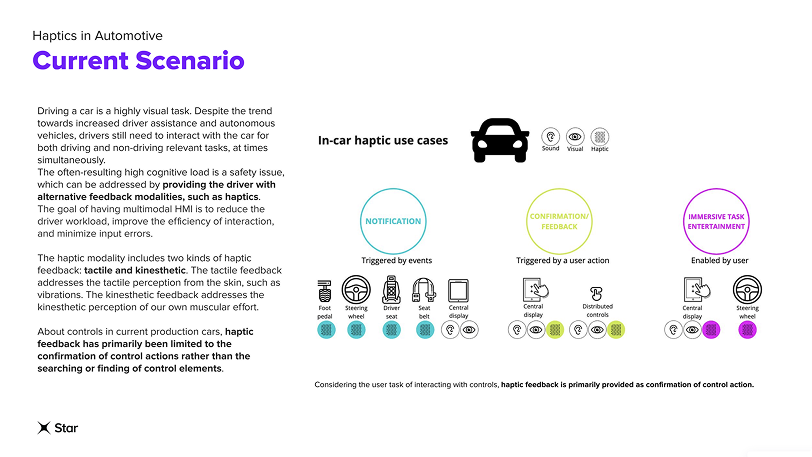
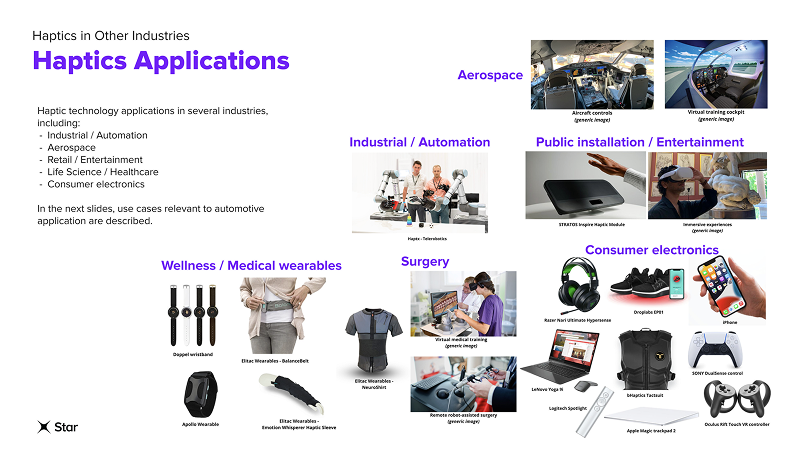
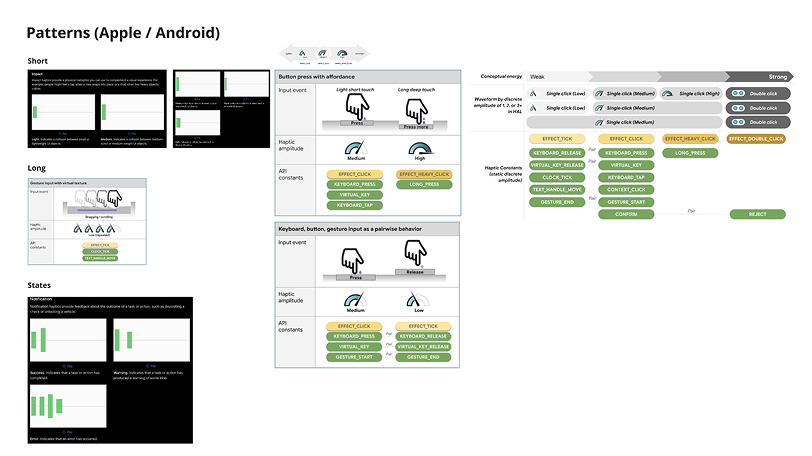
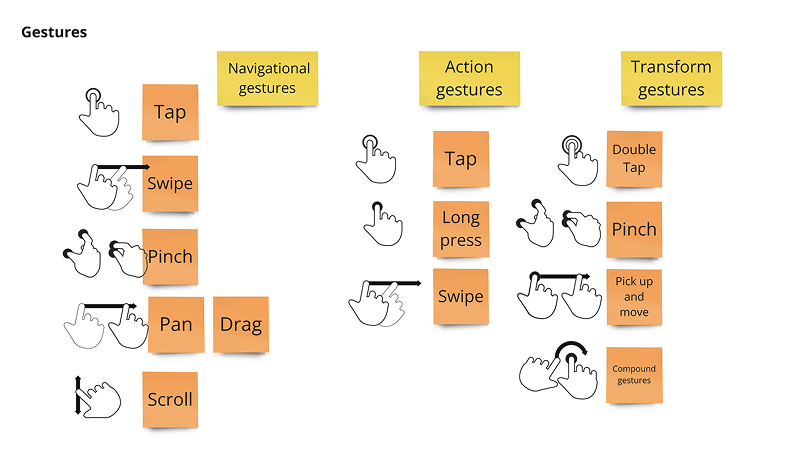
The primary objective of the research phase was to establish a thorough knowledge base by examining existing solutions in both automotive and non-automotive sectors, analysing the principles of haptics and how it works, and identifying the key gestures utilised by drivers when interacting with in-car displays.
Design System
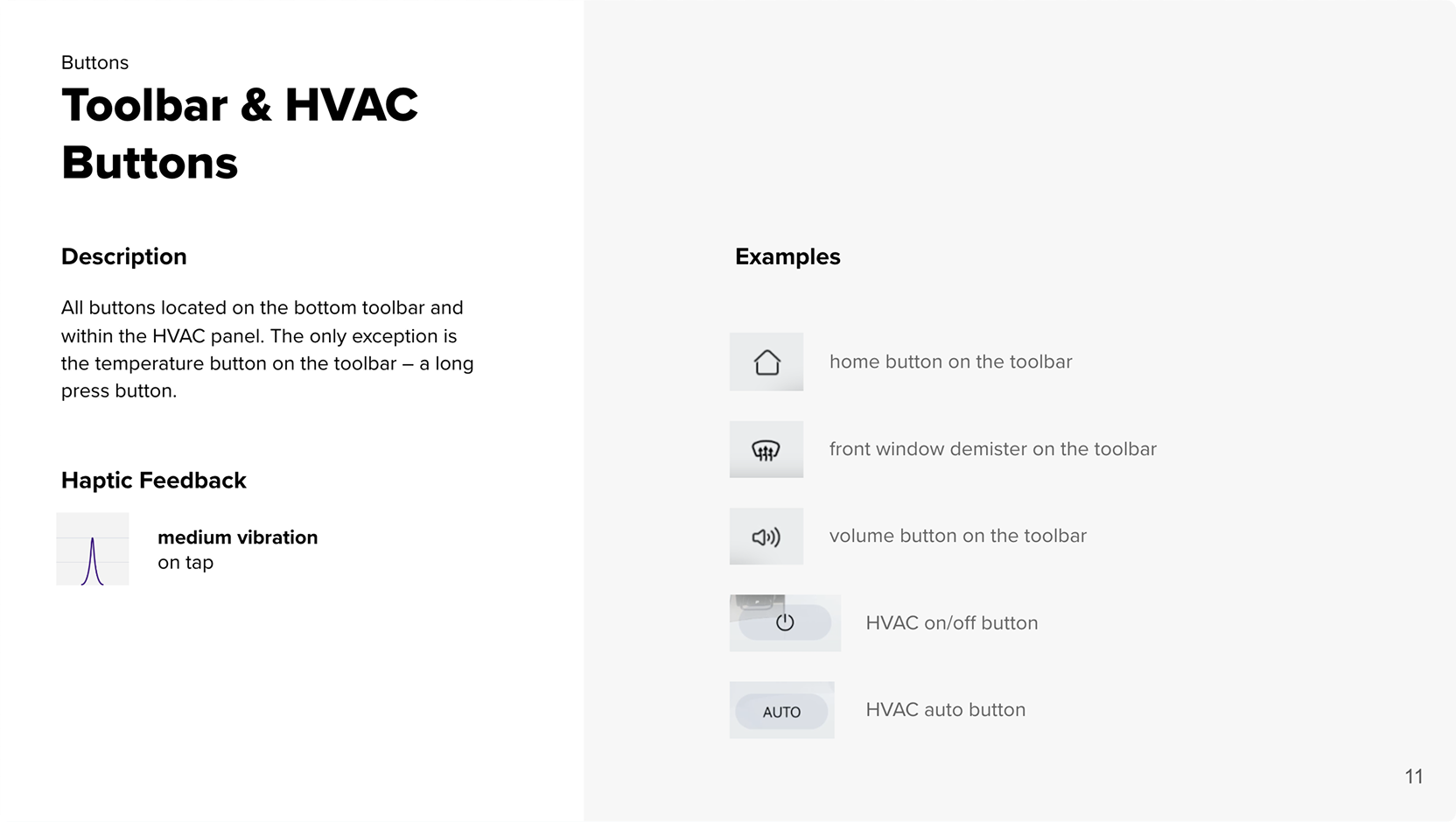
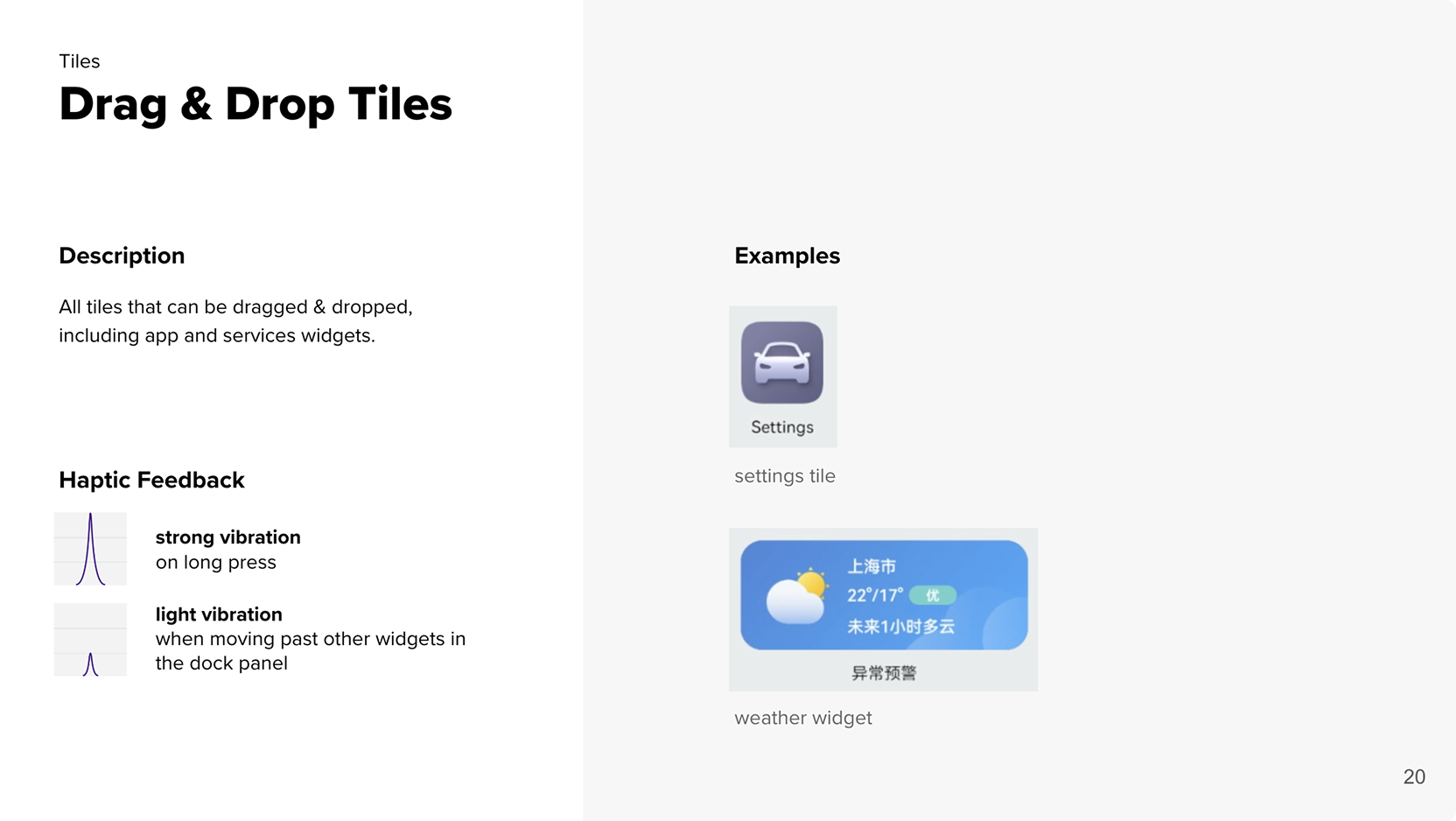
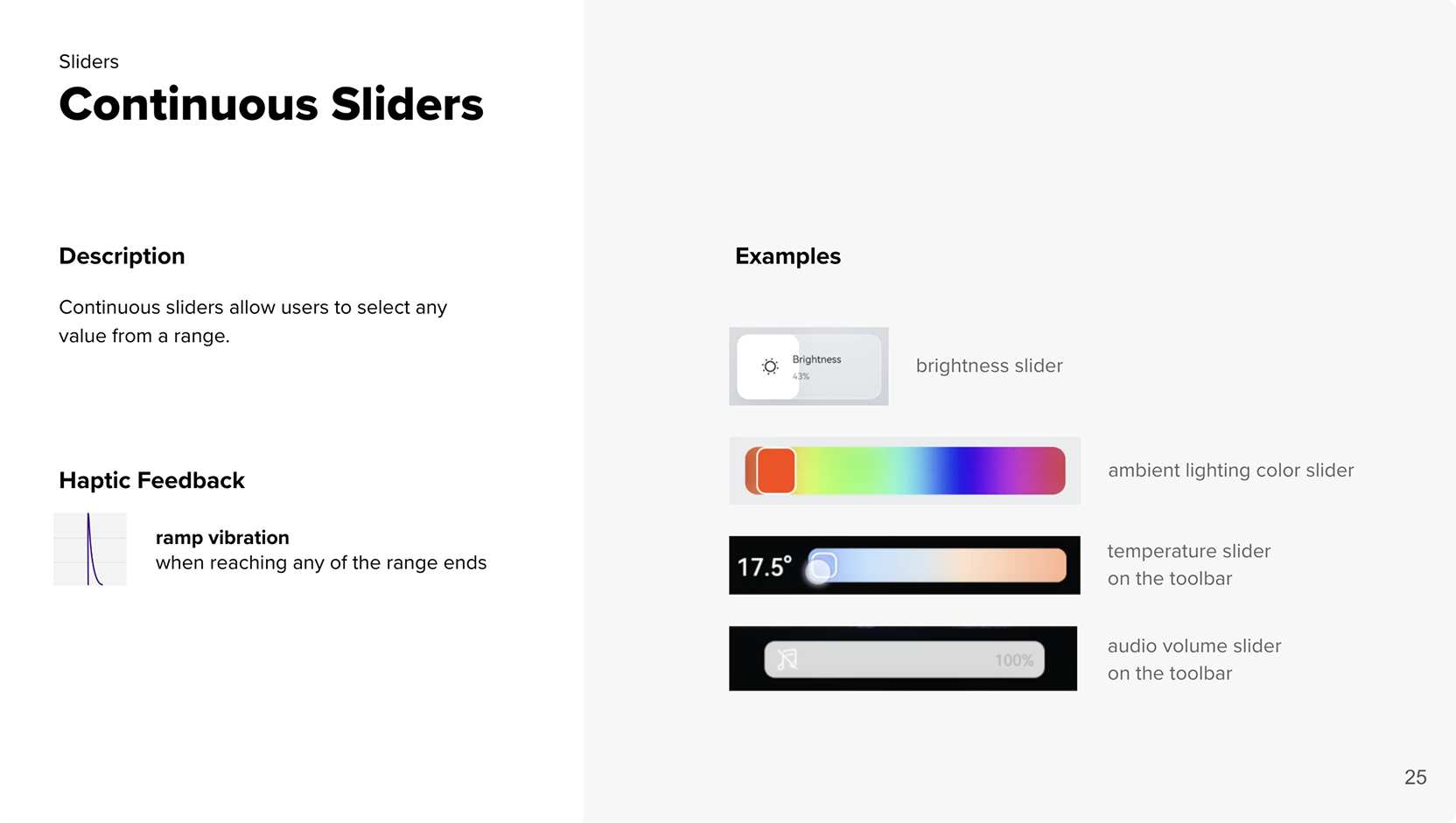
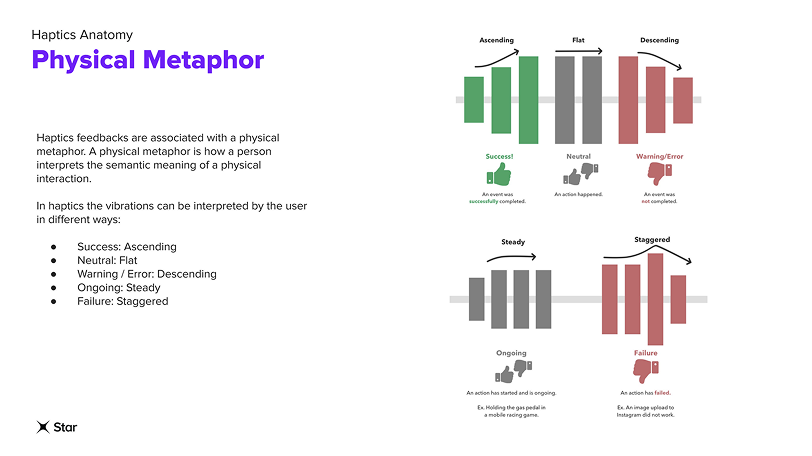
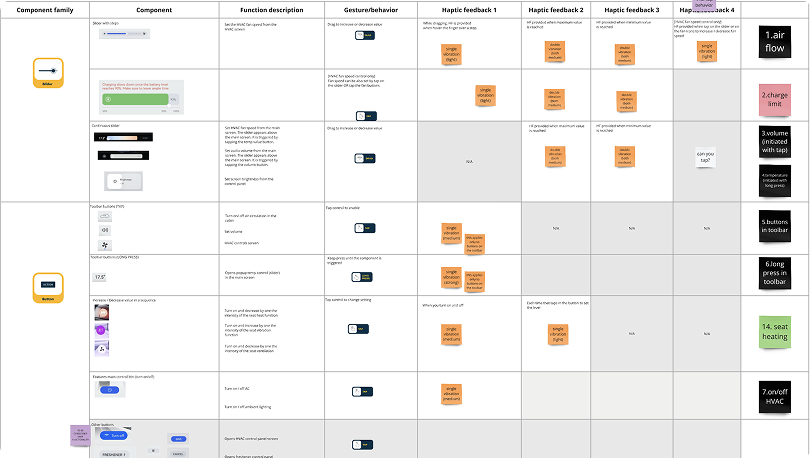
Following extensive research and a collaborative ideation workshop with the client, we identified four distinct haptic effects. Utilizing the existing Harmony OS HMI, we selected several key use cases and aligned the developed haptic principles accordingly. To enhance comprehension, we also dedicated resources to the creation of illustrative video examples. We utilized vibration sound to convey haptic feedback in a video, as replicating the sensation of physical touch in a virtual environment is currently unfeasible.